5 Hours From Now Is What Time?
Ever glanced at the clock and wondered what time it will be five hours from now? Whether you are scheduling a call, timing a layover, or setting a reminder, adding five hours to the current time is a simple calculation anyone can do in seconds. In this guide, you will get the instant answer, learn the easy step-by-step math, browse a full 24-hour reference table, and avoid the common mistakes that trip people up.
Quick Answer
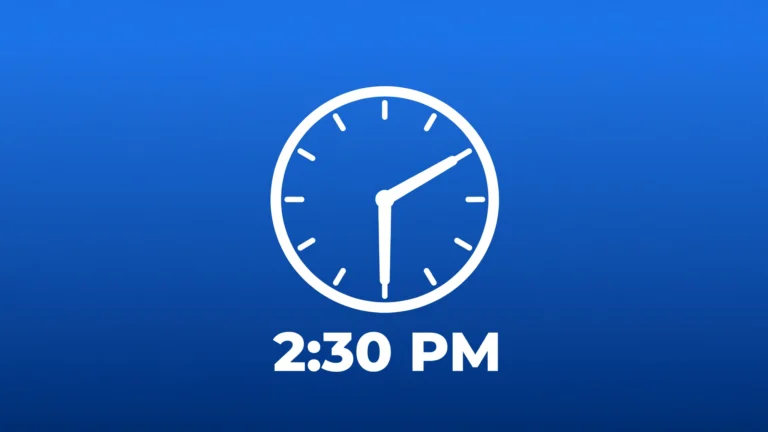
To find what time is 5 hours from now, simply add 5 to the current hour. If the result goes past 12 on a 12-hour clock, subtract 12 and flip AM to PM (or PM to AM). For example, if it is 2:30 PM right now, five hours later it will be 7:30 PM. If it is 10:15 PM, five hours later it will be 3:15 AM the next day.
How to Calculate 5 Hours From Now
Start with the current time on your clock or phone. Split it into hours and minutes in your head, because the minutes will stay exactly the same — you only need to work with the hour. This one detail makes the whole calculation much easier.
Now add 5 to the hour. On a 24-hour clock this is straightforward: 14:00 plus 5 hours is 19:00. If the total reaches 24 or more, subtract 24 — that is how you cross midnight. For example, 22:00 plus 5 hours gives 27, and 27 minus 24 equals 3, so the answer is 03:00 the next day.
On a 12-hour clock, add 5 to the hour and flip AM/PM once you pass 12. For example, 9:00 AM plus 5 hours is 2:00 PM. When you cross midnight — like 11:00 PM plus 5 hours — the answer is 4:00 AM the next morning. Keep the minutes unchanged: 6:45 PM plus 5 hours is 11:45 PM.

24-Hour Reference Table
| Current Time | 5 Hours From Now |
|---|---|
| 12:00 AM | 5:00 AM |
| 1:00 AM | 6:00 AM |
| 2:00 AM | 7:00 AM |
| 3:00 AM | 8:00 AM |
| 4:00 AM | 9:00 AM |
| 5:00 AM | 10:00 AM |
| 6:00 AM | 11:00 AM |
| 7:00 AM | 12:00 PM |
| 8:00 AM | 1:00 PM |
| 9:00 AM | 2:00 PM |
| 10:00 AM | 3:00 PM |
| 11:00 AM | 4:00 PM |
| 12:00 PM | 5:00 PM |
| 1:00 PM | 6:00 PM |
| 2:00 PM | 7:00 PM |
| 3:00 PM | 8:00 PM |
| 4:00 PM | 9:00 PM |
| 5:00 PM | 10:00 PM |
| 6:00 PM | 11:00 PM |
| 7:00 PM | 12:00 AM |
| 8:00 PM | 1:00 AM |
| 9:00 PM | 2:00 AM |
| 10:00 PM | 3:00 AM |
| 11:00 PM | 4:00 AM |
Common Mistakes
The most common mistake is forgetting to flip AM to PM (or PM to AM) when the addition crosses 12. Answering “2” instead of “2 PM” after adding 5 to 9 AM is a classic error that causes missed meetings, so always say the AM/PM label out loud when you do the math.
Another frequent slip is changing the minutes when they should stay the same: 8:40 PM plus 5 hours is 1:40 AM, not 1:45 AM. People also forget the day changes at midnight — 11:00 PM plus 5 hours lands on the next calendar day, so double-check the date when scheduling anything after midnight.
FAQs
What time is 5 hours from now?
Add five hours to the time on your clock right now. For instance, if it is currently 1:00 PM, five hours from now will be 6:00 PM.
What time was it 5 hours ago?
Subtract 5 from the current hour instead. If it is 4:00 PM now, five hours ago it was 11:00 AM.
What time will it be 5 hours from 10:45 PM?
3:45 AM the next day. The hours wrap past midnight (10 + 5 = 15, minus 12 = 3), the minutes stay at 45, and PM flips to AM.
How do I calculate 5 hours from now on a 24-hour clock?
Add 5 to the hour, and if the result is 24 or higher, subtract 24. Example: 20:00 + 5 = 25, and 25 − 24 = 1, so the answer is 01:00.
Does daylight saving time change the answer?
Only if a DST transition falls inside that 5-hour window, which rarely happens. Normally, adding 5 hours to your local time gives the correct local time.