What Time Was It 3 Hours Ago?
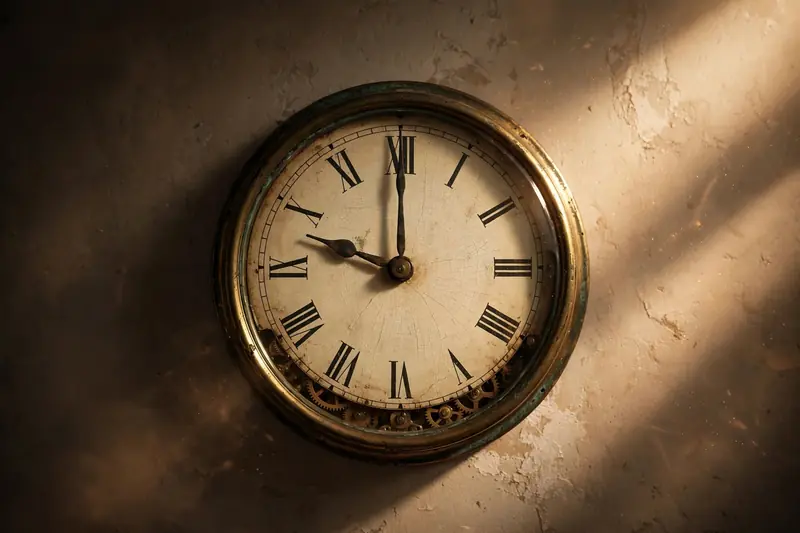
Ever looked at the clock and wondered, “What time was it 3 hours ago?” Whether you’re backtracking work hours, checking when an event started, or settling a friendly debate, the answer is only a quick subtraction away. This guide gives you the instant answer, a foolproof calculation method, a complete 24-hour reference table, common mistakes to avoid, and answers to the questions people ask most.
Quick Answer
To find the time 3 hours ago, simply subtract 3 hours from the current time. If it’s 3:00 PM right now, 3 hours ago it was 12:00 PM. If your subtraction crosses midnight, flip AM to PM (or PM to AM) and keep counting down from 12 — for example, if it’s 2:00 AM now, 3 hours ago it was 11:00 PM yesterday.
How to Calculate 3 Hours Ago
The formula is simple: current time minus 3 hours = the time 3 hours ago. Most of the time this is easy mental math. If it’s 5:45 PM, count back hour by hour: 4:45 PM (1 hour), 3:45 PM (2 hours), 2:45 PM (3 hours). So 3 hours ago it was 2:45 PM. The minutes never change — only the hour moves.
Crossing midnight just takes one extra step. Say it’s 1:30 AM. Count back: 12:30 AM (1 hour), 11:30 PM (2 hours), 10:30 PM (3 hours). The rule is: whenever you pass 12 while counting backward, switch the AM/PM label and continue down from 12. The date also moves back one day, so 10:30 PM was yesterday evening.
On the 24-hour clock it’s even easier: subtract 3 from the hour. At 14:00, 3 hours ago was 11:00. At 01:00, subtracting 3 gives a negative number, so add 24 to get 23:00 — that’s 11:00 PM the previous day. And if you’d rather not do math at all, just type “3 hours ago” into your search engine or ask your phone’s voice assistant for an instant answer.

24-Hour Reference Table
Look up the current time in the left column to see exactly what time it was 3 hours ago — no math needed.
| If the time is now | 3 hours ago it was |
|---|---|
| 12:00 AM | 9:00 PM (previous day) |
| 1:00 AM | 10:00 PM (previous day) |
| 2:00 AM | 11:00 PM (previous day) |
| 3:00 AM | 12:00 AM |
| 4:00 AM | 1:00 AM |
| 5:00 AM | 2:00 AM |
| 6:00 AM | 3:00 AM |
| 7:00 AM | 4:00 AM |
| 8:00 AM | 5:00 AM |
| 9:00 AM | 6:00 AM |
| 10:00 AM | 7:00 AM |
| 11:00 AM | 8:00 AM |
| 12:00 PM | 9:00 AM |
| 1:00 PM | 10:00 AM |
| 2:00 PM | 11:00 AM |
| 3:00 PM | 12:00 PM |
| 4:00 PM | 1:00 PM |
| 5:00 PM | 2:00 PM |
| 6:00 PM | 3:00 PM |
| 7:00 PM | 4:00 PM |
| 8:00 PM | 5:00 PM |
| 9:00 PM | 6:00 PM |
| 10:00 PM | 7:00 PM |
| 11:00 PM | 8:00 PM |
Common Mistakes
The most common mistake is forgetting to flip AM and PM when the calculation crosses midnight. If it’s 1:00 AM, people often answer with a negative number or guess “2:00 AM” instead of the correct 11:00 PM the previous night. Always check whether your subtraction passes 12 — if it does, the AM/PM label changes and so does the date.
Another frequent error is ignoring daylight saving time. On “spring forward” night, 3 hours of real elapsed time can show as only 2 hours on the clock, and on “fall back” night it can show as 4 hours. For everyday calculations the simple subtraction works perfectly, but double-check your result on the two DST transition nights each year — and make sure everyone involved is in the same time zone.
FAQs
What is 3 hours before 12:00 PM (noon)?
9:00 AM the same morning. Since noon minus 3 hours stays within the same AM/PM period, no flip is needed.
What is 3 hours before 12:00 AM (midnight)?
9:00 PM the previous evening. Counting back from midnight: 11:00 PM (1 hour), 10:00 PM (2 hours), 9:00 PM (3 hours).
How do I calculate 3 hours ago using the 24-hour clock?
Subtract 3 from the hour. If the result is zero or negative, add 24. For example, 02:00 minus 3 is -1, plus 24 gives 23:00 — which is 11:00 PM the previous day.
Is “3 hours ago” the same as “3 hours earlier”?
Yes. Both phrases mean the same thing: subtract 3 hours from the reference time. “Ago” counts back from now, while “earlier” can count back from any stated time, but the math is identical.
What time was it 3 hours ago if it’s 5:00 PM now?
2:00 PM. Count back: 4:00 PM (1 hour), 3:00 PM (2 hours), 2:00 PM (3 hours). The minutes stay the same; only the hour changes.