12 Hours From Now Is What Time? — Easy Calculation Guide With Table
Wondering what time it will be 12 hours from now? Whether you’re planning a work shift, scheduling an international call, or simply curious, this guide gives you the answer in seconds. Below you’ll find the simple AM/PM flip rule, a step-by-step calculation method, and a complete 24-hour reference table — plus a live countdown ticking down to your target time in real time.
Quick Answer
Adding 12 hours to any time simply flips AM to PM (or PM to AM) while the hour and minutes stay the same. For example, if it is 9:00 AM now, 12 hours from now it will be 9:00 PM. If it is 9:00 PM now, 12 hours from now it will be 9:00 AM. Scroll down to see the live countdown and the full reference table.
How to Calculate 12 Hours From Now
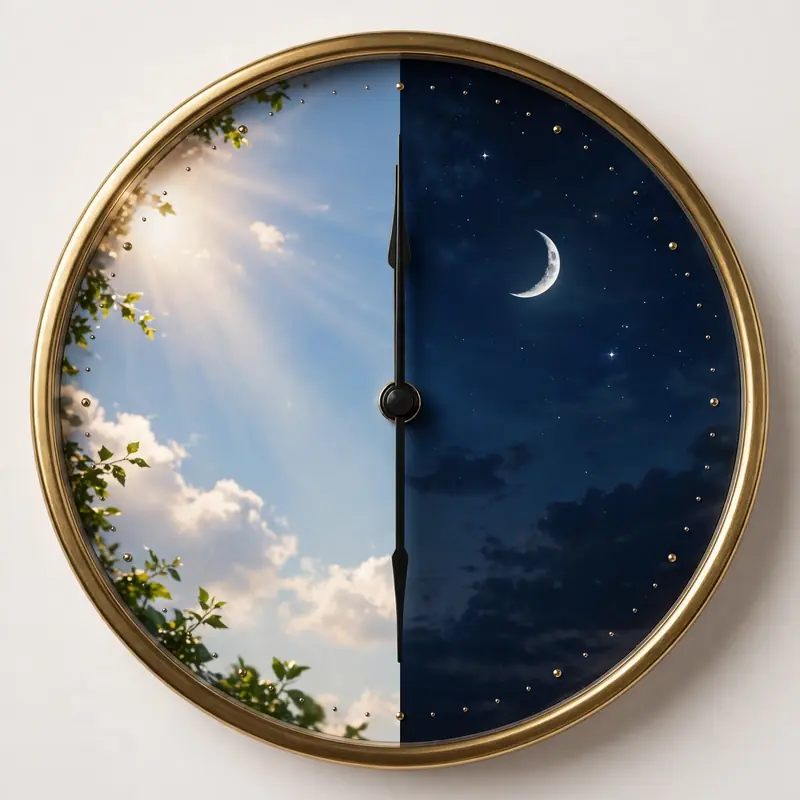
The math behind a 12-hour jump is wonderfully simple: 12 hours is exactly half of a 24-hour day. Adding 12 hours lands you on the opposite side of the clock — the same position on a 12-hour dial, just with AM and PM swapped. Unlike adding 5 or 9 hours, there is no carrying or regrouping to worry about.
To calculate it manually, follow these three steps. First, note the current time, for example 3:45. Second, keep the hour and the minutes exactly the same. Third, flip AM to PM or PM to AM. So 3:45 AM becomes 3:45 PM twelve hours later. In 24-hour format, just add 12 to the hour and subtract 24 if the result reaches 24 or more: 03:45 becomes 15:45, and 21:20 becomes 09:20.
One detail to watch is the calendar date. If your 12-hour jump crosses midnight, the date changes too. For instance, 12 hours from 11:00 PM is 11:00 AM on the next day. If it is 12:00 AM (midnight), then 12 hours later is 12:00 PM (noon) on the same day — no date change needed.

24-Hour Reference Table
Use this quick-lookup table to find what time it will be 12 hours from any hour of the day:
| If it is now | 12 hours from now is |
|---|---|
| 12:00 AM (midnight) | 12:00 PM (noon) |
| 1:00 AM | 1:00 PM |
| 2:00 AM | 2:00 PM |
| 3:00 AM | 3:00 PM |
| 4:00 AM | 4:00 PM |
| 5:00 AM | 5:00 PM |
| 6:00 AM | 6:00 PM |
| 7:00 AM | 7:00 PM |
| 8:00 AM | 8:00 PM |
| 9:00 AM | 9:00 PM |
| 10:00 AM | 10:00 PM |
| 11:00 AM | 11:00 PM |
| 12:00 PM (noon) | 12:00 AM (midnight) |
| 1:00 PM | 1:00 AM |
| 2:00 PM | 2:00 AM |
| 3:00 PM | 3:00 AM |
| 4:00 PM | 4:00 AM |
| 5:00 PM | 5:00 AM |
| 6:00 PM | 6:00 AM |
| 7:00 PM | 7:00 AM |
| 8:00 PM | 8:00 AM |
| 9:00 PM | 9:00 AM |
| 10:00 PM | 10:00 AM |
| 11:00 PM | 11:00 AM |
Common Uses
People reach for the 12-hour calculation constantly in everyday life. Nurses, pilots, security staff, and factory crews plan their lives around 12-hour rotations. Travelers use it when estimating arrival times across the day, and anyone setting an alarm twelve hours out — for example, from 8:00 PM to 8:00 AM — applies this rule without even thinking about it.
It is equally handy for medication schedules taken every 12 hours, baking or fermentation timers, and figuring out what time a live event starts in the opposite half of your day. Once the AM/PM flip clicks in your head, you will use it on autopilot — no calculator required.

Frequently Asked Questions
What is 12 hours from now in 24-hour format?
Add 12 to the current hour, subtracting 24 if the result reaches 24 or more. For example, 10:00 becomes 22:00, and 22:00 becomes 10:00.
Does 12 hours from now ever change the date?
Yes — whenever the 12-hour jump crosses midnight. For example, 12 hours from 11:30 PM is 11:30 AM on the following day.
What is 12 hours from 12 PM (noon)?
12:00 AM, which is midnight at the start of the next day.
What is 12 hours from 12 AM (midnight)?
12:00 PM, which is noon on the same day.
Why does adding 12 hours flip AM and PM?
Because AM and PM each cover exactly 12 hours of the day. Adding one full 12-hour block moves you from one half of the day into the other, so the hour stays the same while the period flips.